
When you lose a tooth, it’s not just about appearance — it’s about function, comfort, and long-term oral health. zubní implantáty, pevné, trvalé náhrady zubů, které se integrují do čelistní kosti jako přirozený kořen. Also known as implantace zubů, they’re the only solution that stops bone loss and keeps neighboring teeth stable. Unlike bridges or dentures, implants don’t rely on surrounding teeth for support. They work like your original roots — and when done right, they last decades.
How do they actually work? A titanium screw is placed into your jawbone, and over time, the bone grows around it — a process called hojení implantátů, přirozené spojení kosti s implantátem, které zajišťuje pevnost a trvalost. This takes anywhere from 2 to 6 months, depending on your health, age, and whether you smoke or have diabetes. If your bone is weak, you might need a bone graft first — but that’s normal and fixable. The key is patience. Rushing the healing means risking failure.
Once healed, the implant gets a crown — a custom-made tooth that looks and feels just like the real thing. But here’s what most people don’t realize: péče o implantáty, stejně důležitá jako péče o přirozené zuby, protože i implantáty mohou trpět záněty dásní a ztrátou podpory. You don’t brush them differently — but you must brush them consistently. Plaque builds up around implants too, and if left unchecked, it leads to peri-implantitis — a serious infection that can cause the implant to loosen. Use a soft brush, interdental brushes, and maybe even an oral irrigator. No shortcuts.
Who’s a good candidate? Almost anyone who’s healthy enough for a routine extraction. Age isn’t a barrier — we’ve placed implants in people over 80. What matters is bone quality, gum health, and whether you’re willing to maintain them. If you’ve been putting off replacing a missing tooth because you think it’s "just one," think again. Missing teeth shift your bite, strain your jaw, and even change your face shape over time.
And no — implants aren’t always expensive. Yes, the upfront cost is higher than a bridge or denture, but when you look at the long-term, they’re often cheaper. You won’t need replacements every 5–10 years. You won’t need to grind down healthy neighbors. You won’t lose bone and need costly rebuilds later.
Below, you’ll find real advice from people who’ve been through it — how long healing really takes, what to avoid after surgery, how to clean around implants without hurting them, and why some people lose implants while others keep them for life. No theory. No fluff. Just what works.
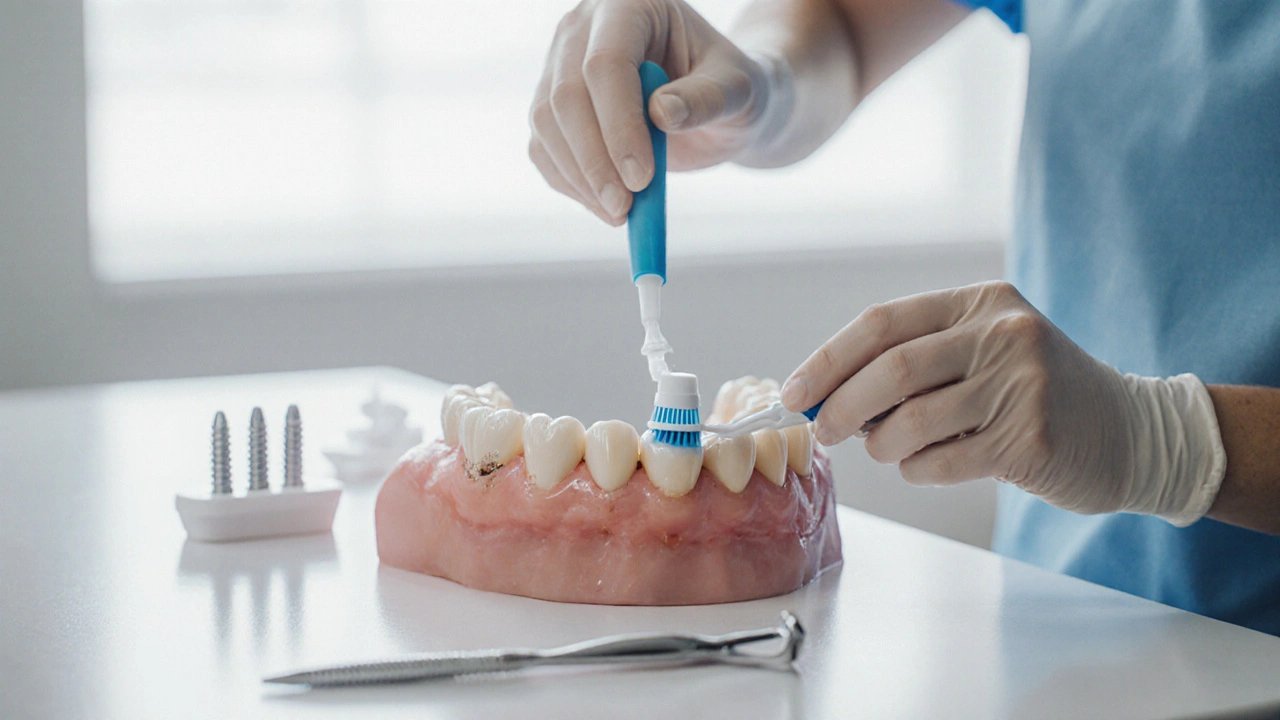
Jak správně čistit zuby s implantáty, aby vydržely celý život. Praktický návod s nástroji, denní rutinou a chybami, které mohou implantát zničit. Bez zbytečných slov, jen to, co funguje.